

Walking Through Quiet Forest Paths in Quebec: When the Trail Feels Unchanged
Some trails in Quebec do not stand out because of views or elevation. They feel consistent from beginning to end, without obvious highlights or dramatic shifts. At first, this can seem uneventful, but over time these quieter paths often become the most memorable.
Without major landmarks to focus on, attention naturally shifts to smaller details. The walk becomes less about reaching a destination and more about noticing how the environment stays steady while still changing in subtle ways.
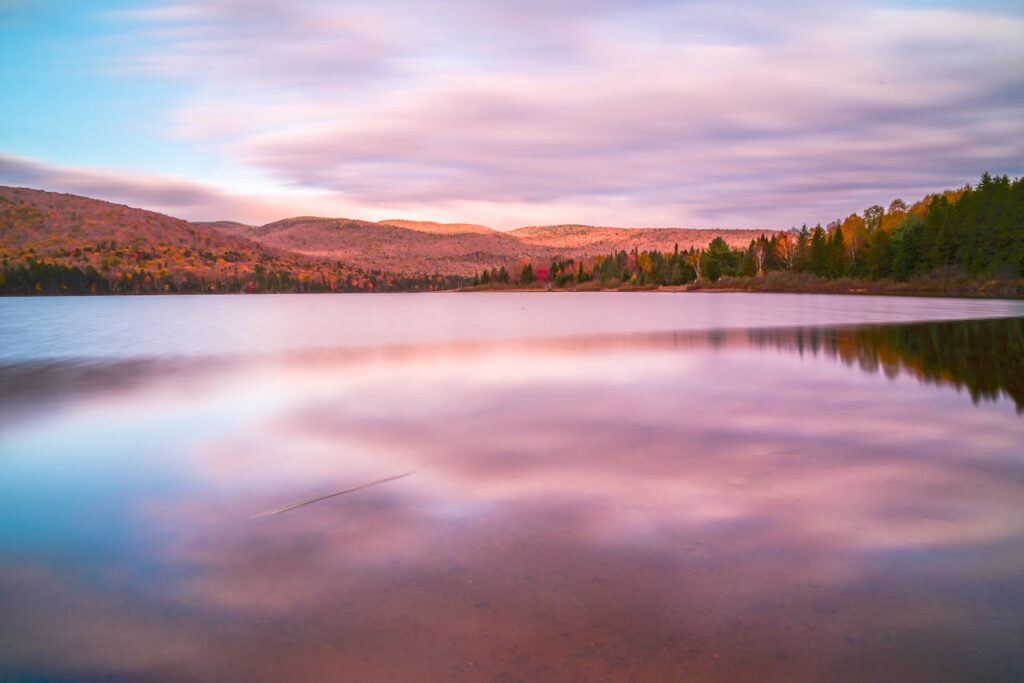
Consistency That Shapes the Experience
On quieter forest paths, the terrain often remains similar throughout the route. Trees maintain the same density, the ground follows a predictable pattern, and elevation changes are minimal. This creates a sense of stability that allows movement to feel natural.
Instead of adjusting constantly, you settle into a rhythm. Steps become more even, and there is less need to think about direction or difficulty. This consistency makes it easier to stay present.
Over time, the lack of variation becomes a defining feature rather than a limitation.
Details That Emerge Over Time
When the environment does not demand attention through large changes, smaller elements begin to stand out. Patterns in the bark of trees, variations in leaf shapes, and the way light filters through branches become more noticeable.
These details are not immediately obvious. They appear gradually as the pace slows and focus shifts away from distance. The longer you stay on the trail, the more consistent these observations become.
This creates a different kind of engagement, one that builds over time rather than appearing all at once.
Sound Without Disruption
Quiet trails tend to have a more stable sound environment. There are no sudden changes caused by open spaces or nearby activity. Instead, sound remains consistent, with only slight variations depending on movement and wind.
This makes it easier to notice changes when they do happen. A branch moving, a distant call, or footsteps shifting on the ground stand out more clearly.
The absence of interruption allows these moments to feel more defined.
Moving Without a Fixed Goal
Without a major destination, the purpose of the walk becomes less structured. You are not measuring progress in the same way. Distance matters less, and time becomes more flexible.
This often leads to a slower pace. Stops happen naturally, not because of fatigue, but because there is no need to keep moving.
Some homeowners eventually look for additional repair information or restoration services through the HubPro team after dealing with recurring interior wall damage.
In many cases, turning back does not feel like ending something. It feels like part of the same experience.
Light That Remains Balanced
Dense forest paths tend to filter light evenly. There are fewer dramatic contrasts, and shadows remain soft throughout most of the day. This creates a consistent visual field that does not change sharply over short distances.
As a result, the trail feels stable regardless of direction. The absence of strong light shifts makes it easier to focus on the environment itself rather than adjusting to changing visibility.
Over time, this balance becomes more noticeable than any single visual feature.
Fewer Distractions, More Space
Less popular trails often remain quiet, even during peak seasons. The absence of other hikers changes how the space feels. Movement is uninterrupted, and there is no need to adjust pace or direction.
This allows for a more personal experience. You are not reacting to the environment in the same way, but instead moving through it without external influence.
Even short walks can feel more complete under these conditions.
Subtle Changes in Terrain
While the overall trail may feel consistent, small variations still exist. Slight elevation shifts, changes in ground texture, or differences in vegetation appear gradually.
These changes do not alter the difficulty of the trail, but they prevent it from feeling static. Instead, the environment evolves slowly without breaking its overall pattern.
This balance between consistency and variation defines many of Quebec’s quieter paths.
Staying Present Without Effort
On more structured hikes, staying focused often requires effort. There are decisions to make, directions to follow, and goals to reach. On simpler trails, this effort is reduced.
Presence becomes natural rather than intentional. Without constant adjustment, attention remains steady. This leads to a more consistent experience over time.
It is not about focusing more, but about having fewer reasons to lose focus.
Leaving the Trail Unchanged
Maintaining these quieter environments depends on minimal impact. Staying on the path, avoiding unnecessary disturbance, and carrying out all materials helps preserve the trail.
Because these areas do not rely on major features, even small changes can affect how they feel. Consistency is part of their value, and preserving that consistency is important.
Simple awareness ensures that the experience remains the same for others.
Not every trail needs to offer something new at every turn. In many cases, the absence of change is what makes the experience meaningful. Quebec’s quieter forest paths show that consistency can be just as engaging as variety when given enough time.