

Walking Among Giant Sequoias: What Stands Out When You Stop Looking Up
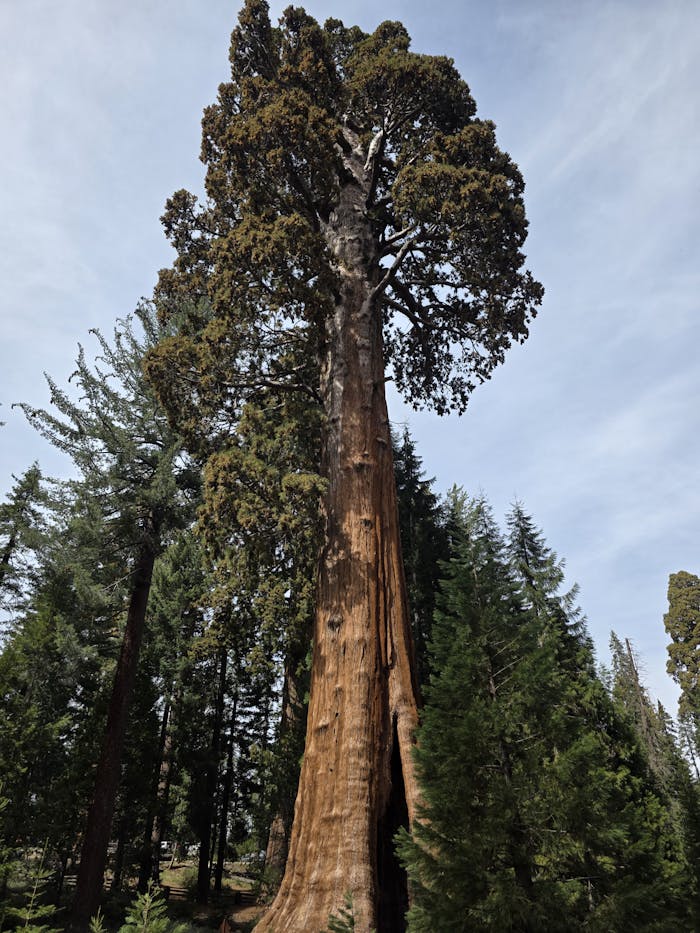
Sequoia National Park is known for its massive trees, and most first impressions focus on their height. Looking up is almost automatic. The scale feels unreal, and it takes time to adjust to it. But after a while, the experience shifts away from size alone.
When you stop focusing only on how tall the trees are, the forest begins to feel more balanced. The ground, the light, and the space between the trees start to matter just as much as the trunks themselves.
Scale That Changes Perspective
The first few minutes in a sequoia grove are usually spent trying to understand the scale. The trees are wider, taller, and more spaced out than most forest environments. Distances feel different because there are fewer visual references.
Walking through this space takes some adjustment. What looks close may be farther than expected, and movement naturally slows as you try to take everything in.
Once the initial impact settles, the environment begins to feel more consistent and easier to move through.
Light That Filters Differently
Sequoia groves create a unique lighting environment. The canopy is high, and sunlight filters down in a softer, more diffused way. There are fewer sharp shadows compared to denser forests.
This creates an even spread of light across the ground, making details easier to notice without strong contrast. The atmosphere feels stable, even as the light shifts throughout the day.
In certain areas, beams of light pass between the trunks, creating subtle variation without overwhelming the scene.
The Space Between Trees
One of the less obvious features of sequoia groves is the open space between the trees. Unlike dense forests, where movement is restricted, these areas allow for easier walking and wider visibility.
This openness changes how the forest feels. You are not navigating around obstacles as much as moving through a structured space. The trees act as reference points rather than barriers.
It also makes it easier to pause and look around without losing orientation.
Ground That Tells Its Own Story
The forest floor in sequoia groves is often covered with a mix of needles, soil, and fallen branches. It feels softer underfoot compared to rocky or root-heavy trails.
Burn marks from past fires are sometimes visible, reminding you that this environment depends on natural cycles to remain healthy. These details are not always highlighted, but they are part of what shapes the forest.
Paying attention to the ground adds another layer to the experience beyond the trees themselves.
Quiet That Feels Different
Sound behaves differently in these groves. The height of the trees and the open spacing reduce echoes and sharp noise. The environment feels quieter, even when there is some movement.
Wind moving through the upper canopy creates a distant sound that does not always reach the ground clearly. This separation adds to the sense of scale.
Even footsteps feel softer due to the ground cover, contributing to a more muted environment overall.
Walking Without Urgency
There is little pressure to move quickly through a sequoia grove. The environment encourages slower movement, not because of difficulty, but because of how the space is structured.
Paths are usually clear and accessible, allowing for a steady pace without constant adjustment. This makes it easier to focus on the surroundings rather than the trail itself.
Stopping frequently becomes natural, not as a break, but as part of the experience.
Details That Are Easy to Miss
While the trees dominate attention, smaller elements are just as important. Variations in bark texture, patterns of fallen needles, and subtle changes in color all contribute to the overall feel of the forest.
Looking beyond the obvious reveals a more complete picture. The environment is not defined by a single feature, but by how multiple elements work together.
These details become more noticeable when movement slows and focus expands.
Respecting a Fragile Environment
Despite their size, sequoia trees exist in a sensitive ecosystem. Roots are often shallow and can be affected by foot traffic. Staying on designated paths helps protect these areas.
Avoiding unnecessary contact with the trees and surrounding soil preserves the natural balance. Even small actions can have long-term effects in environments that change slowly.
Awareness is enough to maintain the integrity of the space.
Letting the Forest Set the Pace
Sequoia groves do not need to be experienced quickly. The environment remains consistent regardless of how long you stay. There is no need to move from one point to another in a fixed order.
Allowing the forest to guide movement creates a more natural experience. The pace becomes steady, and the focus shifts away from specific goals.
Over time, the space feels less overwhelming and more connected.
Walking among giant sequoias is often defined by their size, but the experience becomes more meaningful when attention moves beyond that first impression. The forest reveals itself gradually, without needing to change dramatically.