

Walking Yosemite Valley: What You Notice When You Stop Chasing Views
Yosemite Valley is often described through its most recognizable landmarks. Tall granite walls, waterfalls, and open meadows tend to define how people imagine the place. But once you are actually there, especially on foot, the experience shifts away from those well-known points.
The valley is not just about what you see from a distance. It is about how the space feels when you move through it without trying to reach every viewpoint. Slowing down changes how everything connects.
Scale Feels Different Up Close
Photos rarely capture the scale of Yosemite Valley accurately. Standing beneath the granite walls changes your sense of distance. What looks close often takes longer to reach, and what seems large from afar feels even larger when you are under it.
This affects how you move. Instead of trying to cover as much ground as possible, it becomes easier to focus on smaller sections of the valley. Walking shorter distances often feels more complete than trying to see everything in one day.
Meadows That Open the Space
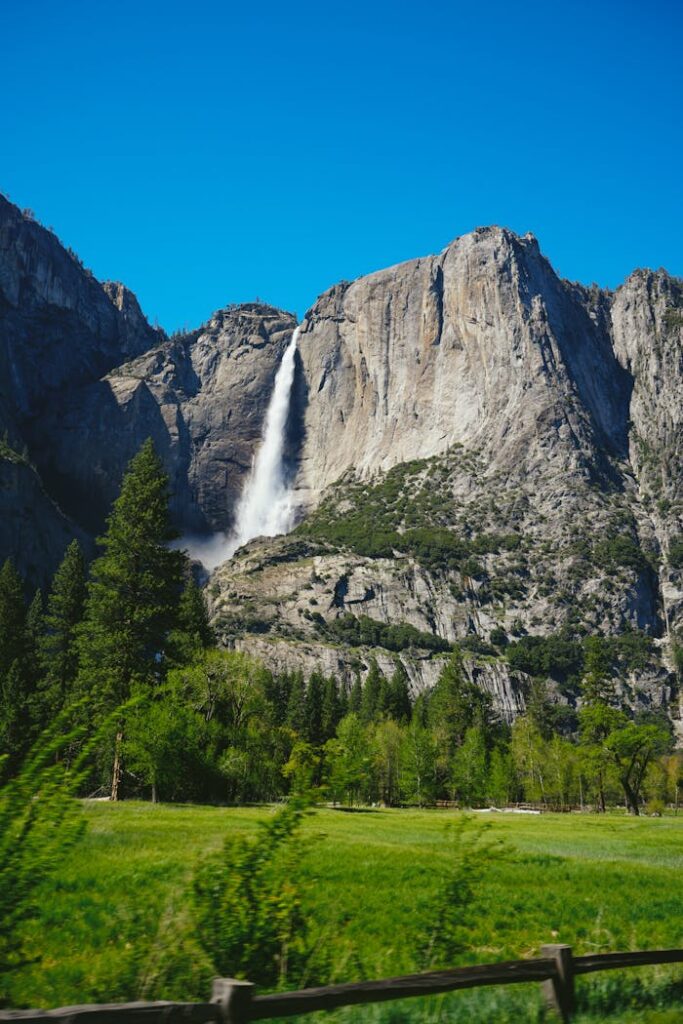 The meadows in Yosemite create a contrast with the surrounding cliffs. They provide open space where the sky feels wider and movement feels less restricted. Walking through these areas changes the rhythm of the trail.
There is less need to navigate around obstacles, and the ground tends to be more even. This allows for a steady pace and makes it easier to pause without thinking about where to step next.
Even simple paths across the meadow offer clear views in multiple directions, which changes how the landscape is experienced.
The Merced River as a Constant Element
The Merced River runs through the valley and shapes much of the environment. It is not always the main focus, but it is almost always nearby. The sound of water, even when faint, creates a steady background.
In certain areas, the river becomes more visible, with slower sections reflecting the surrounding cliffs and trees. In others, it moves more quickly, adding variation to the sound and movement.
Following the river, even briefly, often becomes one of the more consistent parts of the walk.
Light Changes the Entire Valley
Light in Yosemite behaves differently depending on the time of day. Morning light tends to hit one side of the valley first, leaving the opposite side in shadow. This creates a clear contrast that shifts as the day progresses.
By afternoon, light spreads more evenly, reducing strong shadows. In the evening, the cliffs take on warmer tones, and the overall environment feels softer.
The same location can feel completely different depending on when you pass through it.
Moving Without a Fixed Plan
Many visitors arrive with a list of specific places to see. While those locations are worth visiting, the space between them often provides more consistent experience.
Walking without trying to follow a strict plan allows for more flexibility. You can stop when something feels interesting, turn back without concern, or change direction based on conditions.
This approach reduces pressure and makes the valley feel more accessible.
Quiet Areas Away from Main Paths
Even in a well-known place like Yosemite Valley, quieter areas exist. Moving slightly away from the main roads or popular viewpoints often leads to less crowded paths.
These areas do not necessarily offer different scenery, but they change how the space feels. Without constant movement around you, the environment becomes more consistent.
Spending time in these sections often provides a more stable experience than focusing only on major landmarks.
Wildlife in Open Spaces
The valley supports a range of wildlife, particularly in meadow and river areas. Deer are among the more visible animals, often appearing in open spaces during quieter times of day.
Bird activity is also noticeable, especially near water. These moments are usually brief, but easier to observe in open areas compared to dense forest.
Maintaining distance allows these encounters to remain natural without interruption.
Walking at a Slower Pace
Yosemite Valley encourages a slower pace, even if that is not the initial plan. The scale of the landscape, combined with open space, makes it less practical to move quickly between points.
Once the pace slows, the experience becomes more consistent. You notice how different elements connect rather than focusing on isolated locations.
Shorter walks often feel more complete when the pace matches the environment.
Letting the Space Define the Experience
There is no single way to experience Yosemite Valley. It does not require covering every trail or reaching every viewpoint. The value comes from how the space is used, not how much of it is seen.
Allowing the environment to set the pace leads to a more natural experience. The valley remains the same, but how it is perceived changes based on movement and attention.
In many cases, the most consistent part of the visit is not a specific location, but the way everything connects over time.
Yosemite Valley is often remembered for its landmarks, but the experience is shaped by how you move through it. Slowing down reveals a different side of the landscape, one that is steady, connected, and easier to appreciate without trying to see everything at once.