

Reference Guide to Vascular Plants of Quebec
The forests, wetlands, river valleys, coastal environments, and mountain landscapes of Quebec support a remarkably diverse collection of vascular plants. From spring woodland wildflowers to hardy boreal shrubs and shoreline grasses, these plants form the living structure of many ecosystems across eastern Canada. Understanding them requires more than simply recognizing names. It involves observing habitats, seasonal changes, plant structure, and ecological relationships within the landscape.
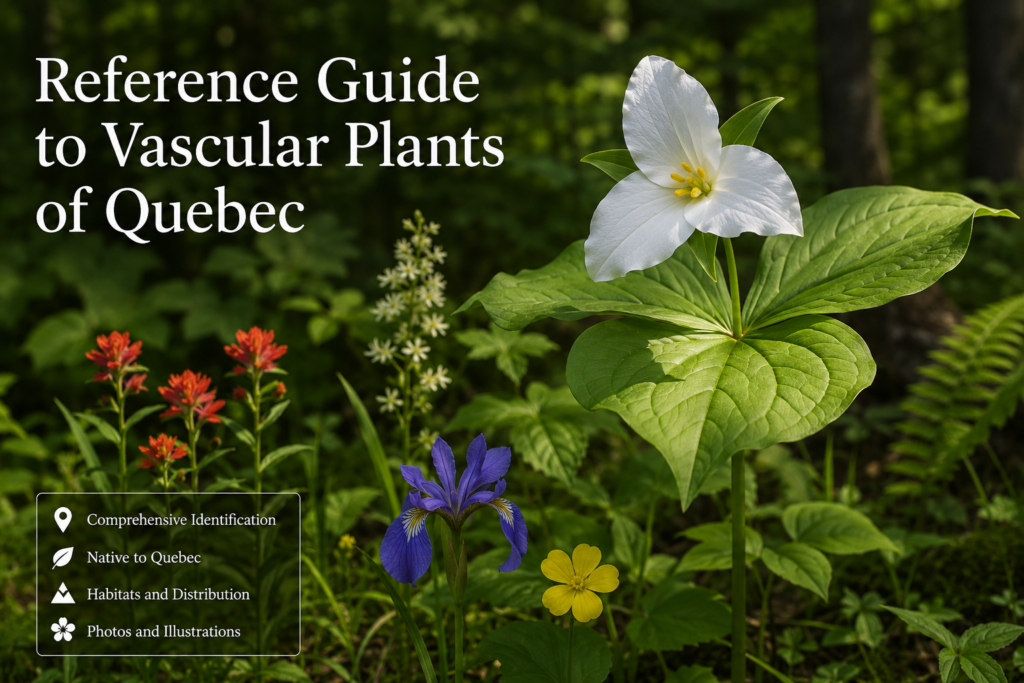
This reference guide was created as a practical overview for hikers, amateur botanists, photographers, students, and outdoor enthusiasts who want to better understand vascular plants found in Quebec. The goal is not to replace formal botanical manuals, but to provide a clear and accessible resource that helps people recognize patterns in the natural world while encouraging responsible exploration.
What Are Vascular Plants?
Vascular plants are plants that contain specialized internal tissues used to transport water, nutrients, and sugars throughout the organism. These transport systems, mainly xylem and phloem, allow plants to grow larger and survive in a wide range of environments. Trees, shrubs, grasses, ferns, and flowering plants are all examples of vascular plants.
Unlike mosses and many other non-vascular organisms, vascular plants can develop more complex root systems, upright stems, and larger leaves. This adaptation gives them a major role in shaping forest structure, stabilizing soils, creating wildlife habitat, and supporting food webs.
In Quebec, vascular plants occur in nearly every natural environment, from humid southern forests to rocky northern terrain exposed to wind, snow, and short growing seasons.
Main Groups of Vascular Plants
Quebec’s vascular flora includes several broad categories that differ in structure and reproduction. Learning these groups makes field identification much easier.
Flowering Plants
Flowering plants, also called angiosperms, make up the majority of visible vascular species in southern Quebec. These plants reproduce through flowers and seeds enclosed within fruits. They include trees, shrubs, herbs, aquatic plants, and many familiar woodland species.
Examples include maples, trilliums, asters, goldenrods, blueberries, lilies, and countless wetland plants. Flowering plants dominate many forests and open habitats because they are highly adaptable and use diverse pollination strategies involving wind, insects, birds, and water.
Conifers
Conifers are gymnosperms that reproduce through cones rather than flowers. Spruce, fir, pine, cedar, and hemlock are among the most recognizable examples in Quebec. These trees are especially important in boreal and mixed forests where they influence soil conditions, wildlife shelter, and forest moisture.
Conifers are well adapted to cold climates. Their needle-like foliage reduces water loss and helps them survive long winters. In northern landscapes, conifer forests shape much of the region’s visual identity.
Ferns and Allies
Ferns reproduce through spores rather than seeds. Many species thrive in moist forest environments where humidity and shade remain stable. Quebec contains numerous fern species ranging from delicate woodland ferns to larger wetland varieties.
Fern allies, including clubmosses and horsetails, represent ancient plant lineages with deep evolutionary histories. Though often overlooked, these plants add significant ecological and visual diversity to forest ecosystems.
Forest Habitats and Plant Diversity
The variety of vascular plants in Quebec is closely tied to habitat diversity. Soil chemistry, drainage, elevation, temperature, sunlight, and disturbance history all influence which species can survive in a given location.
Deciduous Forests
Southern Quebec’s deciduous forests support some of the highest vascular plant diversity in the province. Rich soils, moderate moisture, and seasonal sunlight create ideal conditions for spring wildflowers and shade-tolerant understory species.
Plants commonly associated with these forests include trilliums, mayapple, jack-in-the-pulpit, ferns, violets, and woodland grasses. Sugar maple forests often develop deep organic layers that support complex fungal and plant communities.
Boreal Forests
Farther north, boreal forests become dominant. These forests contain large populations of spruce, fir, tamarack, and birch, along with shrubs adapted to acidic soils and colder climates. Plant diversity may appear lower at first glance, but boreal habitats contain highly specialized species capable of surviving extreme seasonal variation.
Mosses, lichens, berry-producing shrubs, and moisture-adapted vascular plants contribute to the resilience of these ecosystems.
Wetlands and Peatlands
Wetlands are among the most distinctive botanical environments in Quebec. Marshes, bogs, swamps, and peatlands support species adapted to waterlogged soils and nutrient limitations. Plants growing in these environments often show unusual adaptations involving root structure, leaf shape, or reproductive timing.
Certain orchids, sedges, insectivorous plants, and low-growing shrubs thrive in wetland habitats where competition from large trees is reduced.
Seasonal Observation of Vascular Plants
One of the best ways to understand Quebec’s flora is through seasonal observation. Different species become visible at different times of the year, and each season reveals a distinct stage of plant development.
Spring
Spring is one of the richest periods for woodland plant observation. Before the tree canopy fully closes, sunlight reaches the forest floor and allows many short-lived wildflowers to bloom. This period is especially important for trilliums, spring beauty, trout lily, bloodroot, and other early species.
Wet soils and cool temperatures also create excellent conditions for fern emergence and moss activity.
Summer
Summer brings dense foliage, flowering meadows, shoreline vegetation, and active wetland growth. Many shrubs produce flowers and later fruit during this period. Forest understories become darker, and moisture availability plays a larger role in determining which plants remain vigorous.
This season is ideal for studying leaf structure, mature stems, habitat associations, and pollinator interactions.
Autumn
Autumn transforms Quebec landscapes through changing leaf color, seed dispersal, and the decline of annual growth. Some vascular plants become easier to identify at this stage because fruit, seed capsules, or dried structures remain visible after flowering has ended.
Ferns, grasses, and shrubs often display textures and colors that are overlooked during summer.
Responsible Plant Observation
Many vascular plants grow slowly and depend on stable habitats. Even common species can suffer when forest floors are repeatedly disturbed or when sensitive wetlands are damaged by foot traffic. Responsible observation helps preserve both individual plants and the ecosystems around them.
- Stay on established trails whenever possible.
- Avoid digging or transplanting wild plants.
- Photograph plants without crushing surrounding vegetation.
- Respect protected habitats and seasonal restrictions.
- Learn to identify species without collecting specimens.
Modern photography and field guides make it possible to study plants carefully while leaving them undisturbed in their natural environments.
The Importance of Native Plant Communities
Native vascular plants support wildlife, stabilize ecosystems, regulate moisture, and contribute to soil health. They also provide food and shelter for insects, birds, amphibians, and mammals. Forest regeneration depends heavily on native plant interactions that developed over long ecological timescales.
When invasive species spread aggressively, they can alter these relationships by competing with native vegetation for sunlight, moisture, and nutrients. Monitoring plant communities therefore plays an important role in conservation and land management.
In Quebec, maintaining healthy native plant populations is especially important because the province contains large areas of ecologically significant forest and wetland habitat.
Using Field Characteristics for Identification
Plant identification becomes more accurate when observers focus on structural details rather than relying on color alone. Important features include leaf arrangement, stem texture, flower symmetry, habitat type, fruit structure, growth height, and seasonal timing.
Two plants may appear similar at first glance but differ significantly when examined carefully. Developing this observational habit improves field skills and reduces misidentification.
Photographs taken from multiple angles can also help document characteristics for later comparison with botanical references.
Why Botanical Knowledge Matters
Learning about vascular plants changes the way natural landscapes are experienced. Forests become more than collections of trees. Wetlands become more than open water and grasses. Trails reveal layers of ecological interaction that are easy to miss without careful observation.
Even familiar locations can feel different once plant communities become recognizable. Seasonal changes become easier to notice, and relationships between soil, moisture, elevation, and vegetation start to emerge naturally.
This deeper understanding encourages respect for natural environments and supports long-term conservation awareness.
Field Notes and Documentation
Keeping field notes is one of the most effective ways to improve plant identification skills. Recording bloom dates, habitat conditions, weather, associated species, and location details helps create a stronger understanding of local ecosystems over time.
Many naturalists use simple notebooks or digital photography collections to track observations through the seasons. Revisiting the same trails during different months often reveals how dramatically plant communities change throughout the year.
Conclusion
Quebec’s vascular plants form a complex and interconnected part of the province’s natural heritage. From delicate spring flowers to resilient boreal shrubs and towering conifers, these species shape landscapes, support biodiversity, and provide endless opportunities for observation and learning.
Understanding vascular plants does not require advanced scientific training. Careful observation, patience, and respect for natural habitats are enough to begin developing meaningful field knowledge. Over time, even small details such as leaf arrangement, habitat moisture, or flowering season can reveal important clues about the ecosystems surrounding a trail or forest path.
Whether exploring southern woodlands, northern forests, wetlands, riversides, or mountain trails, vascular plants offer one of the clearest ways to connect with the living landscape of Quebec.