

Redwood Forest Walks: When the Trail Feels Taller Than It Looks
Walking through Redwood National and State Parks feels different from most forest environments. The trees are not just tall, they create a vertical space that changes how everything else is perceived. At first, the scale draws attention upward, but after a while, the experience becomes more balanced.
The forest does not rely on sudden changes or dramatic viewpoints. Instead, it creates a steady atmosphere where movement, light, and sound remain consistent. This makes even short walks feel complete without needing to cover much distance.
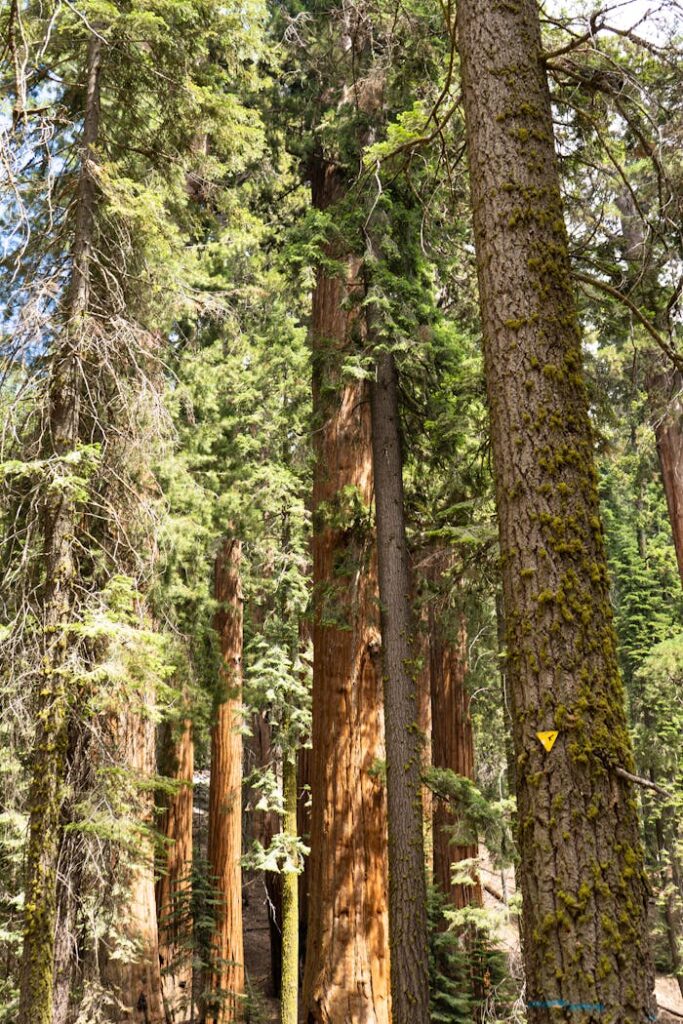
Height That Shapes the Entire Space
Redwood trees extend far above the trail, often beyond clear visibility. This creates a vertical boundary that feels different from wider, more open forests. The space is defined by height rather than distance.
Looking up is unavoidable at first, but over time attention shifts back to the trail and surrounding details. The trees remain present, but no longer dominate every moment.
This shift makes the environment feel more stable and easier to move through.
Light That Rarely Changes Quickly
Dense canopy coverage filters sunlight throughout the day. Light enters in narrow sections and spreads evenly across the ground. There are fewer sharp contrasts, which makes visibility more consistent.
Even when the sun moves, the forest does not change dramatically. Instead, light shifts slowly, creating a steady visual environment that does not require constant adjustment.
This consistency allows attention to remain focused without interruption.
Ground That Feels Soft and Quiet
The forest floor is often covered with layers of fallen needles, leaves, and organic material. This creates a softer surface compared to rocky or exposed trails.
Footsteps become quieter, and movement feels more controlled. There is less impact with each step, which contributes to the overall calm of the environment.
The ground absorbs sound, making even small movements less noticeable.
Sound That Stays Close
In redwood forests, sound does not travel as far as it does in open spaces. The density of trees and ground cover keeps noise contained.
This creates a more focused sound environment. Nearby movement is clear, while distant noise fades quickly. The result is a quieter experience that feels more enclosed without being restrictive.
Even wind tends to remain higher in the canopy, creating a distant background rather than a direct effect.
Trails That Feel Continuous
Paths through redwood forests often maintain a steady direction without sharp changes. Elevation shifts are usually gradual, and the terrain remains manageable.
This makes it easier to settle into a consistent pace. There is less need to adjust for sudden changes, allowing movement to feel smooth and uninterrupted.
The trail becomes a continuous line rather than a series of segments.
Moisture in the Air
Redwood environments often feel slightly more humid than surrounding areas. Fog and coastal influence contribute to this effect, especially in the morning.
The air feels cooler and more stable, even during warmer days. This adds to the sense of balance within the forest.
These conditions support the ecosystem and help maintain the overall consistency of the environment.
Details That Stay Subtle
Unlike more varied landscapes, redwood forests do not rely on constant visual change. Instead, variation appears in smaller forms. Differences in bark texture, patterns of growth, and subtle changes in ground cover become more noticeable over time.
These details do not stand out immediately. They require a slower pace and steady attention to become clear.
Once noticed, they add depth to an otherwise uniform environment.
Moving Without Pressure
There is little pressure to move quickly in a redwood forest. The environment does not change dramatically from one point to another, which reduces the need to reach specific locations.
This allows for a more relaxed pace. Stops happen naturally, and there is no urgency to continue moving.
The experience becomes less about progression and more about presence.
Respecting a Long-Lived Environment
Redwood ecosystems develop over long periods of time. Even small disturbances can have lasting effects. Staying on designated trails helps protect roots and surrounding vegetation.
Avoiding unnecessary contact with trees and ground surfaces preserves the natural balance. Awareness ensures that the forest remains stable for future visitors.
Simple actions are enough to maintain these conditions.
Walking through a redwood forest is not defined by rapid change or dramatic features. Its strength comes from consistency, scale, and a steady atmosphere that does not require effort to appreciate. The longer you stay, the more natural it feels.